
By Anne Gonzales, LCI Public Information Officer
Every summer, I worry about my dad laboring in extreme heat. I hear his stories about his co-workers collapsing in the fields … calling out for help.
As summer temperatures in California’s Central Valley rise, Fabiola Moncerrat Perez-Lua’s concerns about her father working in Tulare County citrus and nut orchards also mount.
This is the real-world workplace for the people who tend and harvest our food supply, and climate-driven extreme heat is only intensifying, adding to the health risks, the emotional scars, and the heightened strain of daily life in immigration uncertainty and isolation.
Now, a landmark project is about to bring life-saving relief and tools to workers and families exposed to the threats of intense heat: a new community resilience hub built at a Tulare County school, providing immediate respite in a safe, air-conditioned space, while offering resources and training to reduce the risks posed by heat, and over time, a sense of belonging.
Funded by the California Governor’s Office of Land Use and Climate Innovation (LCI), the San Joaquin Valley Extreme Heat Project — or SJV Heat — is set to open its resilience center in October. The project received a grant from LCI’s Extreme Heat and Community Resilience Program, which distributed nearly $32 million across 45 projects in the first round of funding beginning in 2024.
The grants support local, regional and Tribal efforts to reduce extreme heat impacts — prioritizing the most vulnerable communities — through heat action plans, cooling solutions, and surface reflection improvements.
The program’s Round 2 grant funding window is now open, with $27.5 million available for heat infrastructure projects to protect California communities from extreme heat. Grant pre-applications are due on July 21, and full applications are due Oct. 13.
The grant program was launched in 2022 in response to global, state, and local warming trends.
Extreme heat is already the deadliest climate change-driven hazard in California, and heat waves in cities are projected to cause two to three times more heat-related deaths by mid-century.
SJV Heat — a collaboration among Roots of Change, the Central California Environmental Justice Network, Tracking California, University of California, Berkeley, and the Terra Bella school district — is taking multi-pronged action steps to protect people from the increasing sweltering heat now and in the future, including:
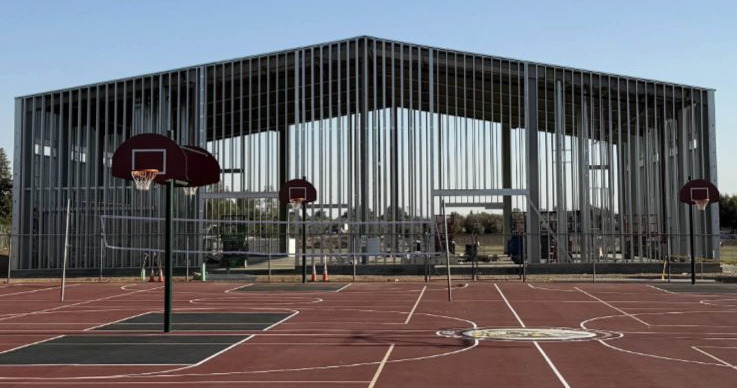
- Building a cooling center and resilience hub at the gym of the new Terra Bella Middle School, where local families can come to cool off, escape wildfire smoke, learn how to protect themselves from heat stress, and to potentially hold community events.
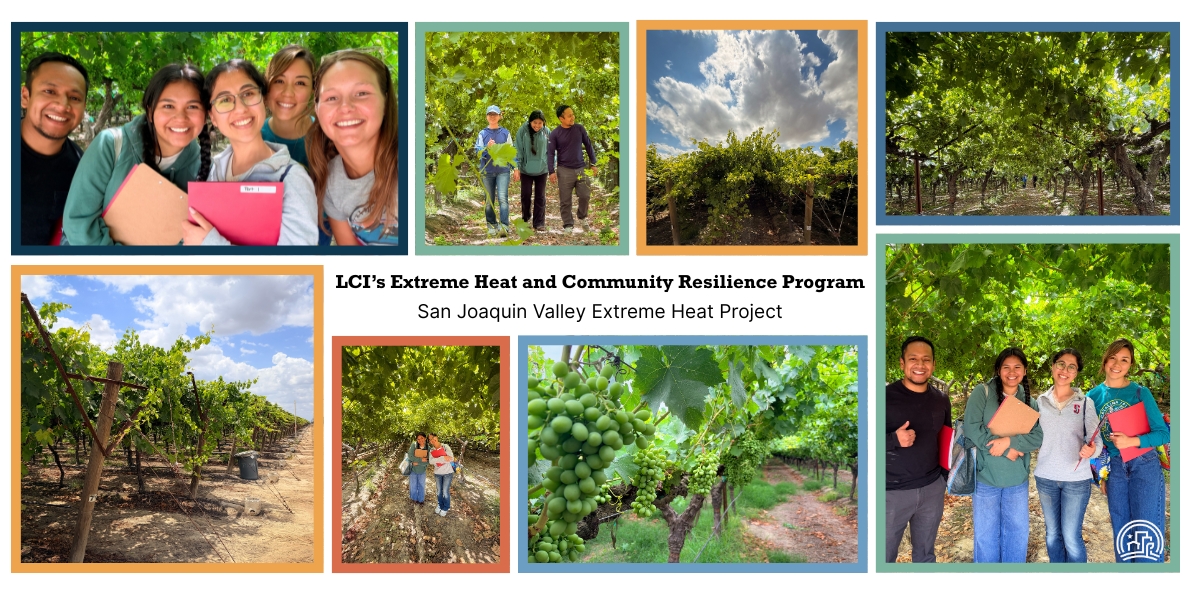
- Conducting field research, surveys, and one-on-one interviews with farmworkers to understand the prevalence and physical and emotional effects of heat illness on the community. The gathering of real-life frontline experiences with extreme heat will inform future mitigation strategies.
- In-person training sessions for farmworkers on preparing for heat and recognizing the signs of heat stroke and stress. “Resiliency packets,” supplies for helping them stay cool and safe, are provided in the trainings.
The resiliency hub project is also acting as a statewide learning collaborative, a centralized resource for other areas throughout California to share knowledge and strategies for protecting outdoor workers and families from hot temperatures. The project leads are currently holding virtual webinars with other groups throughout the state.
Growing up in an immigrant farmworker family, Perez-Lua has a personal connection to the public health crisis taking place in agricultural communities. She’s also a UCLA graduate fellow in immigration policy and farmworker health, and part of a UC Berkeley team researching extreme heat impacts on farmworkers through the SJV Heat project.
Of the 157 farmworkers they surveyed in the Central Valley last summer, 70% — or 110 workers — said they had personally experienced heat illness or symptoms, and 75% — 118 workers — said they have seen a co-worker experience symptoms.
In one-on-one interviews with 15 farmworkers, they found that 14 had “horrific stories” to relate about the growing incidence of heat illness, she said.
These are stories of farmworkers fainting, collapsing, yelling to their co-workers to help, or having to go to the emergency room. They told stories of being the first responders in these events, and so they’re really traumatic experiences. They heard a co-worker yell for help, they had to take off their co-worker’s clothing in an effort to cool them down, they were running down the avenue — in extreme heat — to flag down the ambulance and guide the ambulance through the maze of fields.
“These are stories of farmworkers fainting, collapsing, yelling to their co-workers to help, or having to go to the emergency room,” she recalled. “They told stories of being the first responders in these events, and so they’re really traumatic experiences. They heard a co-worker yell for help, they had to take off their co-worker’s clothing in an effort to cool them down, they were running down the avenue — in extreme heat — to flag down the ambulance and guide the ambulance through the maze of fields.”
The resilience hub is meant to help the community manage the rising intensity and incidence of extreme heat. Besides offering fresh, cool air, and heat protection training, the center is designed to fill a pervasive gap in the immigrant farmworker experience by providing a gathering space for laborers and their families, historically marginalized and unseen by the general community.
Perez-Lua said the project is taking the lead in building broad-based healthy communities in isolated unincorporated farming areas throughout the San Joaquin Valley.
There’s very little investment in the social and community infrastructures of these regions, so often, you’ll go into an agricultural community and there’s a liquor store, there’s a gas station, but there’s no community center, there’s no hospital. So, one of the great things about this project is we’re attempting to expand health-centered, community-centered, well-being centered infrastructure in the San Joaquin Valley, one cooling center at a time.
About the Extreme Heat and Community Resilience Grant Program
The Extreme Heat and Community Resilience Grant Program funds and supports local, regional, and Tribal efforts to reduce the impacts of extreme heat. The Extreme Heat and Community Resilience Program coordinates the state’s efforts to address extreme heat and the urban heat island effect.
Extreme Heat Resources
More information
More information
More information