By Anne Gonzales, LCI Communications
Stephanie Manieri is getting a front-row view of extreme heat in her community, and it’s alarmingly personal for her.
I grew up in southwest Santa Rosa, and my dad works in construction, so he’s spent a career of long years outdoors, and it feels like it’s getting worse out there. What I see in my neighborhood is that we don’t have a lot of green or open spaces, and fewer shady areas compared to other parts of the city.
She is highlighting the twin issues of climate-driven heat across the state. Not only are temperatures rising and heat waves intensifying and lingering longer, but some neighborhoods are disproportionately feeling the impacts.
That’s where the community stepped in to make a change.
As executive director of Latino Service Providers in Sonoma County, Manieri teamed up with the Greenbelt Alliance to secure a state grant and launch the Southwest Santa Rosa Holistic, Equitable, Actionable, Transformative (HEAT) Action Plan. The effort received about $473,000 from the state to develop an Extreme Heat Action Plan, the first step to identifying vulnerability and creating solutions, while engaging the community and particularly youth.
The grant came from Extreme Heat and Community Resilience Program, funded by the Governor’s Office of Land Use and Climate Innovation (LCI), which distributed nearly $32 million across 45 projects in the first round of funding beginning in 2024.
The grants support local, regional and tribal efforts to reduce extreme heat impacts – prioritizing the most vulnerable communities – through heat action plans, cooling solutions, and surface reflection improvements.
The grant program was launched in 2022 in response to accelerated global, state, and local warming trends.
The Southwest Santa Rosa project is one of nearly 30 extreme heat planning projects funded through the grant program, each taking a locally tailored approach to understanding how heat affects their communities and creating and implementing practical strategies for protecting people and resources.
Manieri said the Santa Rosa project is on track to have an actionable extreme heat plan by 2027, with steps to build in community resilience, respond during a heat event, and recover from the effects.
This will be a road map centered on community voices and experiences, so our residents are getting the support they need and seeing changes happen. This will equip them to live healthier lives and be more resilient. This is really an important moment in our understanding, because there’s been no reliable heat data set on the neighborhood scale, qualitative or quantitative, and that’s one of the outcomes we’re hoping to see.
Excessive heat is a growing health and environmental threat in California and the West, with the inland valleys regularly reaching triple-digit temperatures and even coastal areas experiencing higher-than-average heat. Hot weather set records in spring of 2026, continued to break records throughout the summer, and is still flaring up this fall. An early October heat wave is baking the state, with temperatures soaring to more than 20 degrees above normal, and warm nights providing little relief.
Scientists now predict more than 450,000 heat-related deaths globally because of high temperatures generated by El Nino in the coming months. About 1,000 of those excess deaths are expected in California.
In southwest Santa Rosa, the effects of hot weather on people, infrastructure, and nature are crippling. A lack of tree canopy, shade structures, parks and open spaces, combined with long stretches of pavement create urban heat islands, where the temperatures spiral to even higher levels than the surrounding environment.
The area also faces wildfire threat due to worsening climate change effects, with the size and severity of fires increasing in Sonoma County over the past few years. Climate-driven wildfires produce another set of health and economic risks, including smoke inhalation and housing and job insecurity, especially for outdoor workers.
Because of its vulnerability to heat effects, Greenbelt Alliance named southwest Santa Rosa a Resilience Hotspot, key locations where land and communities are at greatest risk of experiencing climate hazards and equity concerns.
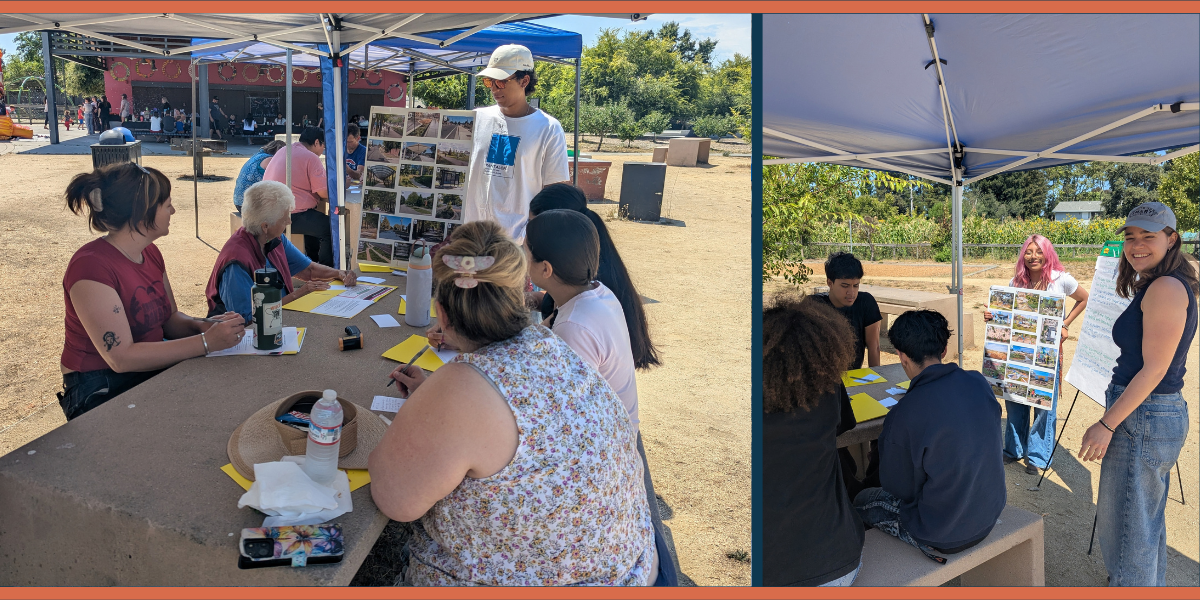
The Southwest Santa Rosa Extreme HEAT project is currently working toward broader community engagement, such as public educational events, and conducting focus groups and one-on-one interviews with residents to document how different populations feel heat impacts.
At a recent community workshop, residents were given ambient heat monitors to place just outside their homes for 30 days to measure climate conditions.
It’s really exciting to have this kind of citizen science. It’s so important to capture and collect this fine-scale data that’s currently not available for this area.
An essential part of the community awareness and outreach efforts is getting local youth involved, said Mariah Padilla, Greenbelt Alliance’s North Bay Resilience Manager. Thirteen Santa Rosa youth aged 17-25 are Climate Impact Innovators, an innovative youth leadership academy created to support the development of the Heat Action Plan. They are gathering data and spreading the word about the dangers of extreme heat, learning how to recognize signs of heat illness, and educating their community on how to stay prepared and protected from the effects of extreme heat. Most importantly, these youth leaders ensure that youth priorities and concerns are centered in the Heat Action Plan.
Using handheld heat monitors, the youth team collects temperatures in shade and sun, tests heat absorption on pavement versus grass and trees and maps the resulting outputs. They’re also designing outreach survey plans and learning interaction skills.
This is about training local youth to be environmental advocates. We’re training the next generation of community and environmental advocates. They are talking to their families and friends, and these ripple effects will have hopeful impacts in the future.